
Choosing the right Molded Case Circuit Breaker (MCCB) is a critical decision that directly affects electrical safety, system reliability, and operational efficiency. MCCBs are widely used in industrial, commercial, and infrastructure power distribution systems due to their high current ratings, adjustable protection settings, and robust design.
This comprehensive guide explains how to select the right molded case circuit breaker based on current rating, breaking capacity, trip unit type, standards compliance, and application scenarios. Drawing on industry best practices and technical insights from SPX molded case circuit breaker solutions, this article aims to help engineers, contractors, and procurement professionals make informed decisions.

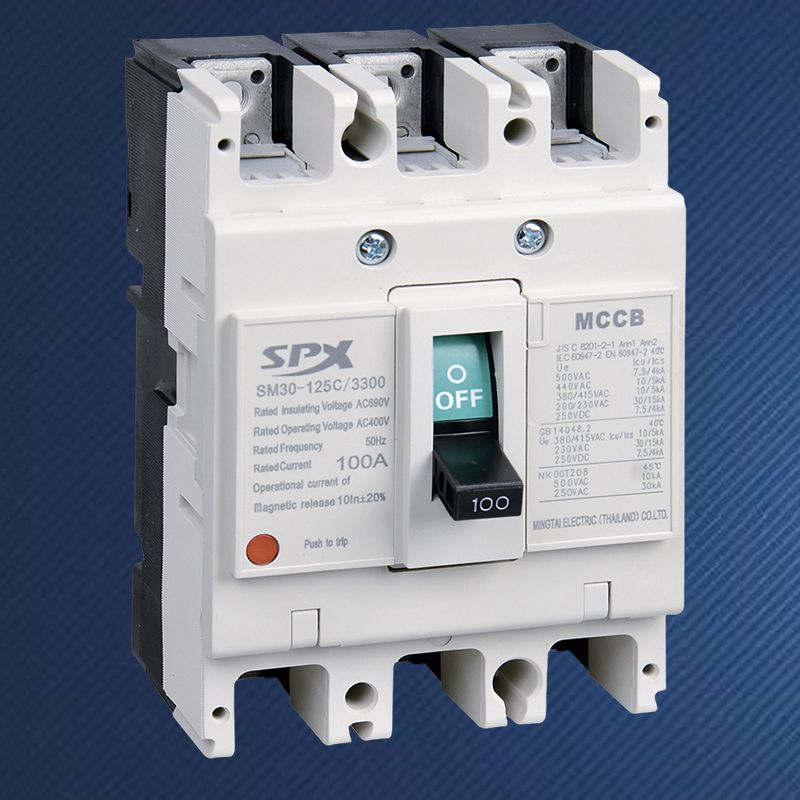
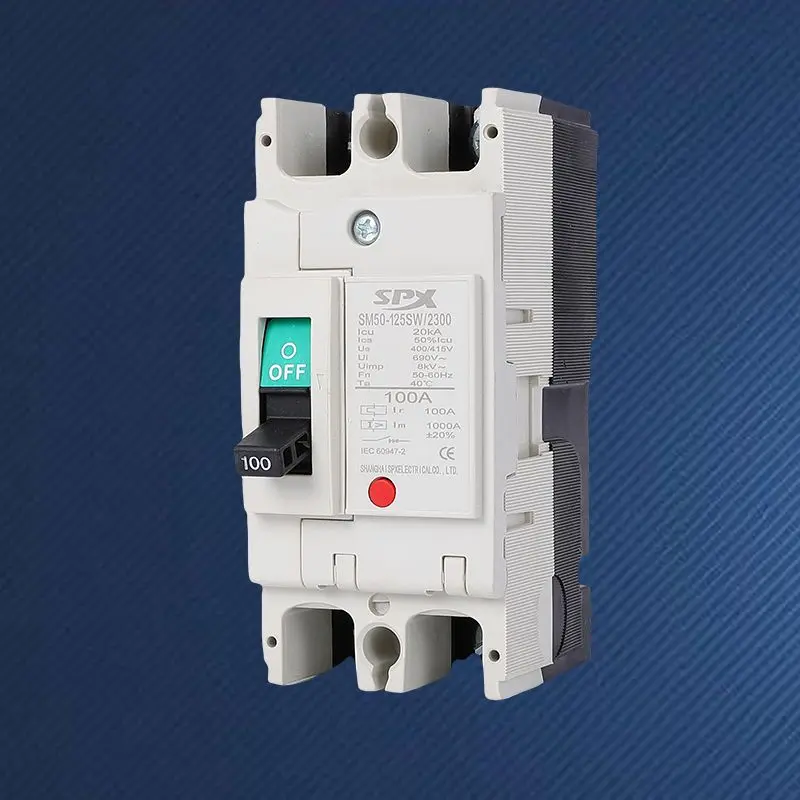
A Molded Case Circuit Breaker is a type of electrical protection device designed to safeguard circuits from overloads, short circuits, and ground faults. The breaker is enclosed in a molded insulating case, providing mechanical strength and enhanced safety.
Unlike miniature circuit breakers (MCBs), MCCBs support higher current ratings—typically from 15A up to 2500A—and offer adjustable trip settings, making them ideal for demanding power distribution environments.
An incorrectly selected MCCB may trip unnecessarily or fail to trip during faults, leading to costly downtime or safety hazards.
The rated current defines the maximum continuous current the MCCB can carry without tripping. It should be slightly higher than the system’s normal operating current.
Breaking capacity refers to the maximum fault current the MCCB can safely interrupt. High industrial environments often require MCCBs with high short-circuit breaking capacities.
Choose between 2P, 3P, or 4P MCCBs depending on single-phase or three-phase systems.
Ensure the MCCB complies with IEC 60947-2, UL 489, or other applicable standards.
Manufacturers like SPX offer a wide range of molded case circuit breakers designed for both standard and customized applications.
| Parameter | Description |
|---|---|
| Rated Voltage (Ue) | Maximum operational voltage |
| Rated Current (In) | Continuous current rating |
| Breaking Capacity | Maximum fault current interruption capability |
| Trip Setting | Adjustable overload and short-circuit protection |
| Feature | MCB | MCCB | ACB |
|---|---|---|---|
| Current Range | Up to 125A | 15A–2500A | 800A–6300A |
| Adjustability | No | Yes | Yes |
| Applications | Residential | Industrial / Commercial | Main incomers |
Proper installation and maintenance significantly extend the service life of molded case circuit breakers.
Most MCCBs have a mechanical lifespan of 10–20 years, depending on operating conditions and maintenance.
Yes, MCCBs with adjustable thermal and magnetic settings are commonly used for motor protection.
Frequent tripping, overheating, or visible damage are key indicators.
Absolutely. MCCBs are widely used in solar and wind power distribution systems.
Selecting the right molded case circuit breaker is not just about meeting current requirements—it’s about ensuring long-term safety, reliability, and performance. By understanding ratings, applications, and standards, you can choose an MCCB that perfectly matches your system needs.
If you are looking for reliable, high-performance molded case circuit breakers backed by engineering expertise, SPX offers comprehensive solutions tailored to global markets. Feel free to contact us to discuss your project requirements and get professional support.